

All content was accurate at the time of publication. Check issuer’s site for most up to date information.
katiestraveltricks.com has partnered with CardRatings for our coverage of credit card products. katiestraveltricks.com and CardRatings may receive a commission from our partners. American Express is a katiestraveltricks.com advertiser. This compensation may impact how and where links appear on this site. This site does not include all financial companies or all available financial offers. Terms apply to American Express benefits and offers. Enrollment may be required for select American Express benefits and offers. Visit americanexpress.com to learn more. For Capital One products listed on this page, some of the above benefits are provided by Visa® or Mastercard® and may vary by product. See the respective Guide to Benefits for details, as terms and exclusions apply.
Every Credit Card I Keep (And Why I Pay $3,000 a Year in Annual Fees)
I pay almost $3,000 a year for a stack of credit cards in annual fees. And yes, for a family that has always been pretty frugal, that is more than our monthly mortgage payment.
So why would we do this?
That’s exactly what I’m walking you through in this post. I’m going to show you every card my husband and I keep and pay an annual fee on year after year, talk about the benefits we get from those fees, and share how you can do your own cost-benefit analysis to make the right decision for you.
I also want to be upfront about something: some of my decisions are different because I’m a content creator, and I’ll be transparent about that where it applies. What I do is not prescriptive. Only you know the value of any given benefit to your own family and lifestyle.
A Quick Note Before We Dive In
This post is specifically about our long-term keeper cards — the ones we plan to hold year after year as of 2026. In any given year, I also have other cards with annual fees that I’m keeping just for that year, usually to maximize a welcome offer. I’m not counting those here.
We’ve been doing this for 15 years. If you’re newer to points, some of this might sound overwhelming. That’s okay. This is where we are 15 years in — you don’t have to do all of this at once.
Prefer to Watch or Listen?
My Own Take on “Earn and Burn”
Before we get to cards, I want to address something you’ll hear a lot in the points world: the “earn and burn” strategy. The idea is that it’s better to use your points as you earn them rather than sitting on a big stash, because points generally lose value over time, just like any currency.
That is not what I do.
I like having a big stash of points at my disposal so that when I get an idea of where I want to travel with my family, I have options. Yes, my points might be worth a little less than they were a few years ago. I’m okay with that tradeoff. And yes, that means I pay a little more in annual fees to keep my options open — but that’s a choice I make intentionally.
Flexible Points Cards
These are the cards we keep to stay active in the major flexible points currencies — Chase Ultimate Rewards®, American Express Membership Rewards®, Capital One Venture Miles, and Citi ThankYou® Points. Flexible points are so valuable because you can transfer them to a variety of airline and hotel partners, which gives you a lot of options when it comes time to book travel.
Chase Sapphire Reserve®

Katie's Take
Why this card might (or might not) be right for you.
Show
Hide
Katie's Take
Why this card might (or might not) be right for you.
High annual fee but if you can use at least some of the coupons on this card, you can come out ahead and have some great perks. I personally really like this card but it does take work to manage.
Highlights
The key benefits and earning rates at a glance.
Terms Apply
Show
Hide
Highlights
The key benefits and earning rates at a glance.
Terms Apply
-
$300 Annual Travel Credit Receive an automatic statement credit for travel purchases each cardmember anniversary year.
-
Up to $120 Global Entry / TSA PreCheck® / NEXUS Statement Credit Statement credit of up to $120 every 4 years as reimbursement when you pay for Global Entry, TSA PreCheck® or NEXUS application fee.
-
Airport Lounge Access (Sapphire + Priority Pass + 2 Guests) Access to Sapphire Lounges and Priority Pass™ lounges for you and 2 guests. One of the few remaining premium cards offering 2 free guest entries — most competitors have curtailed this.
-
DashPass Subscription + $35/Month DoorDash Credit (Through Dec 31, 2029) Complimentary DashPass membership plus $35/month in DoorDash credits ($420/yr). Available through December 31, 2029.
Offer History
See past welcome bonuses to gauge whether the current offer is elevated.
Show
Hide
Offer History
See past welcome bonuses to gauge whether the current offer is elevated.
| Offer | Spend Req. | Date |
|---|---|---|
| 100,000 Points | $6,000 in 3 months | Standard |
| 150,000 PointsElevated | $6,000 in 3 months | Ended June 15, 2026 |
| 125,000 PointsElevated | $6,000 in 3 months | August 2025 - April 2026 |
| 100,000 Points + $500 Chase TravelElevated | Standard spend req | Relaunch offer July - late August 2025 |
| 75,000 Points | Standard spend req | Ended June 2024 |
| 80,000 PointsElevated | Standard spend req | Public online offer December 2022 |
| 100,000 PointsElevated | Standard spend req | Ended 2019 |
| 100,000 PointsElevated | Standard spend req | Launch offer 2016 |
| 60,000 Points | Standard spend req | Long-running historical standard (post-2016 launch) |
| — | — |
This is my most expensive card, which means I have a lot of work to do to justify keeping it. And yet — I do. Here’s how I get there.
The first benefit is a $300 travel credit, and I value this at the full $300. It is genuinely the easiest travel credit of any card I’ve ever had. Any purchase that codes as travel — including parking and public transportation — automatically applies toward the credit until you hit $300.
This card also has a collection of DoorDash credits: DashPass through December 31, 2027, two $10 non-restaurant credits per month, and a $5 credit per month. That’s potentially $300 in value per year. I had only valued this at about $150 per year since we’re buying things that cost a little more than we’d pay at the grocery store. Update April 2026 — this is no longer really useful for pickup options so I will now value this at $0.
There are also two $150 dining credits per year at select restaurants, for a total of $300. We use these when we travel or for a date night in Chicago. My team even built a map where you can search all the eligible locations, since Chase doesn’t make it easy to find them. I value this at $200 since it does steer us toward more expensive restaurants — but honestly, I kind of like that.
And then there are two $150 StubHub credits per year, totaling $300. I value this at the full $300. We use StubHub all the time for last-minute Cubs games and theater tickets in Chicago, and the deals can be really great when you buy close to the event.
So before I even get to the additional credits — Apple subscriptions, Lyft, hotel credits — I’m at $800 in value on a $795 card. Add in lounge access for the cardholder plus two guests, and it’s a keeper for us.
You can check out the full benefits calculator here to help understand exactly what your value would be.
Chase Sapphire Preferred®

Katie's Take
Why this card might (or might not) be right for you.
Show
Hide
Katie's Take
Why this card might (or might not) be right for you.
THE top beginner card I recommend for points. The travel protections it provides are top tier, too!
Highlights
The key benefits and earning rates at a glance.
Terms Apply
Show
Hide
Highlights
The key benefits and earning rates at a glance.
Terms Apply
-
Up to $120 Global Entry / TSA PreCheck® / NEXUS Statement Credit Statement credit of up to $120 every 4 years as reimbursement when you pay for Global Entry, TSA PreCheck® or NEXUS application fee.
-
$100 Annual Chase Travel℠ Hotel Credit Get up to $100 in statement credits each account anniversary year for hotel stays purchased through Chase Travel℠.
-
One year of Apple TV Get one year of complimentary Apple TV after activation. Must activate by 12/31/2026.
-
Complimentary DashPass (Activate by Dec 31, 2029) Activate your complimentary DashPass subscription for $0 delivery fees on eligible DoorDash and Caviar orders.
-
Comprehensive Travel & Purchase Protections Includes primary car rental coverage, trip cancellation/interruption insurance, trip delay reimbursement, baggage delay insurance, emergency evacuation and transportation, purchase protection, and travel and emergency assistance.
Offer History
See past welcome bonuses to gauge whether the current offer is elevated.
Show
Hide
Offer History
See past welcome bonuses to gauge whether the current offer is elevated.
| Offer | Spend Req. | Date |
|---|---|---|
| 100,000 PointsElevated | $5,000 in 3 months | June 17, 2026 - July 30, 2026 |
| 75,000 Points | $5,000 in 3 months | Standard since June 23, 2025 |
| 100,000 PointsElevated | $5,000 in 3 months | Ended May 2025 |
| 60,000 Points + $300 Chase TravelElevated | $4,000 in 3 months | Sept - early Nov 2024 |
| 75,000 PointsElevated | $4,000 in 3 months | Early May - mid June 2024 |
| 80,000 PointsElevated | $4,000 in 3 months | Public online offer March 2023 - May 2023 |
| 80,000 PointsElevated | $4,000 in 3 months | Ended Fall 2022 |
| 100,000 PointsElevated | $4,000 in 3 months | Ended Fall 2021 |
| 60,000 Points | $4,000 in 3 months | Long-running historical standard (pre-June 2025) |
My husband has this card rather than his own Sapphire Reserve®. One of the big reasons we keep it is that Chase lets us pool points across our household — so we can earn points on both cards and then decide where to move them from there, whether that’s to my loyalty accounts or his.
This card also has $10 per month in DoorDash credits through December 31, 2027. My husband had been using his at local liquor stores (it was basically his beer money), but Illinois recently changed the rules on that, so he’s pivoting to other options.
At $95, it’s a relatively easy fee to justify when you factor in the credits and the value of keeping Chase points alive and flexible.
Chase Ink Business Cards
We have three Ink cards across our household businesses.
- Chase Ink Business Unlimited® (in my husband’s account, no annual fee) — We put general Airbnb expenses on this one. It technically earns cash back, but we can combine it with our Sapphire cards to convert that into transferable points.
- A second Chase Ink Business Unlimited® (in my account, no annual fee) — My general spender for recurring business expenses for Katie’s Travel Tricks.
- Chase Ink Business Preferred® (annual fee: $95) — The main reason I got this one is that I have a lot of business travel expenses, and it earns 3 points per dollar on travel.
The Blue Business® Plus Credit Card from American Express

The Blue Business® Plus Credit Card from American Express
Terms Apply
Katie's Take
Why this card might (or might not) be right for you.
Show
Hide
Katie's Take
Why this card might (or might not) be right for you.
A great way to keep your Membership Rewards points alive without an annual fee, and it doesn't hit your 5/24 count.
Offer History
See past welcome bonuses to gauge whether the current offer is elevated.
Show
Hide
Offer History
See past welcome bonuses to gauge whether the current offer is elevated.
| Offer | Spend Req. | Date |
|---|---|---|
| 15,000 Points | $3,000 in 3 months | Standard |
| 50,000 Points (targeted)Elevated | Varies | Occasional targeted offer |
My husband and I both have this card, and the reason is simple: it keeps our American Express Membership Rewards® points alive without us having to pay an annual fee on a premium Amex card. I’ve actually never had a personal card that earns Membership Rewards — in 15 years of points, I’ve built all of mine through business cards. My husband has had a few of the personal cards, but this no annual fee card is what keeps our stash flexible and transferable for both of us.
Capital One Venture X® Rewards Credit Card

Katie's Take
Why this card might (or might not) be right for you.
Show
Hide
Katie's Take
Why this card might (or might not) be right for you.
If you can easily use the $300 travel credit, this card is a keeper. Lounge access is pretty stingy though unless you're a high spender.
Highlights
The key benefits and earning rates at a glance.
Terms Apply
Show
Hide
Highlights
The key benefits and earning rates at a glance.
Terms Apply
-
$300 Annual Capital One Travel Credit Receive a $300 annual credit for bookings through Capital One Travel. Applies to flights, hotels, and rental cars booked through the portal. Doesn't roll over.
-
10,000 Bonus Miles Each Anniversary Every year starting on your first anniversary, get 10,000 bonus miles — redeemable for a minimum of $100 in travel.
-
Priority Pass + Capital One Lounge Access Access to Capital One Lounge and Landing locations and participating Priority Pass™ lounges, after enrollment.
-
Up to $120 Global Entry / TSA PreCheck® Statement Credit Statement credit of up to $120 every 4 years as reimbursement when you pay for Global Entry or TSA PreCheck® application fee.
Offer History
See past welcome bonuses to gauge whether the current offer is elevated.
Show
Hide
Offer History
See past welcome bonuses to gauge whether the current offer is elevated.
| Offer | Spend Req. | Date |
|---|---|---|
| 100,000 MilesElevated | $10,000 in 6 months | Launch offer (Nov 2021) |
| 75,000 Miles | Standard spend req | Standard since March 2022 |
| 90,000 MilesElevated | Standard spend req | Referral-only Oct 6 - early Dec 2023 |
| 75,000 Miles | Standard spend req | Standard for all of 2024 and 2025 |
| 100,000 MilesElevated | $10,000 in 6 months | Ended January 2026 |
| 75,000 Miles | $4,000 in 3 months | Standard |
Up until recently, this has been a card we’ve kept to maintain our stash of Capital One Venture Miles. The math on it is pretty straightforward: you pay $395, you get $300 in Capital One Travel credits and 10,000 miles on your account anniversary — so it’s easy to break even.
But here’s the thing. Now that Capital One has dropped lounge access for guests and authorized users, I’m personally ready to downgrade. I already have a lot of credits to manage, and this card has just become one more thing on my plate.
My plan is to try to downgrade to the Venture One card. Capital One doesn’t always let you do that, so if it doesn’t work out, I might open a new Venture One or a Spark 1.5x Miles Select — both no annual fee options that would keep our miles alive. Either of those would add to my 5/24 count, but it might be worth it.
Citi Strata Elite℠
Katie's Take
Why this card might (or might not) be right for you.
Show
Hide
Katie's Take
Why this card might (or might not) be right for you.
The credits make it a bit harder to get the full value of that $595 annual fee back. But because they are calendar year credits, the very first year of holding the card has a much higher value potential.
Highlights
The key benefits and earning rates at a glance.
Terms Apply
Show
Hide
Highlights
The key benefits and earning rates at a glance.
Terms Apply
-
Up to $300 Off a 2+ Night Hotel Stay Each calendar year, up to $300 off a hotel stay of 2+ nights booked through cititravel.com and prepaid with this card.
-
Up to $200 Annual Splurge Credit℠ (Choose 2 of 5 Brands) Up to $200 in statement credits each calendar year on purchases from your choice of up to 2 of: 1stDibs, American Airlines (exclusions apply), Best Buy®, Future Personal Training, and Live Nation (exclusions apply). Best Buy is the easiest path (buy a $200 Amazon or other store gift card). American Airlines $200 gift cards never expire, so you can buy one each year for AA spending.
-
Up to $200 Annual Blacklane® Chauffeur Credit ($100 Semi-Annually) Up to $200 in statement credits each calendar year on Blacklane purchases (premium global chauffeur service): up to $100 Jan-Jun, up to $100 Jul-Dec.
-
Priority Pass™ Select Membership Complimentary Priority Pass Select membership for cardmember + authorized users + up to 2 guests. Access to 1,500+ airport lounges worldwide. Annual membership fee is $469. NOTE: restaurants are NOT included with this Citi version of Priority Pass. Authorized users get their own membership with their own 2-guest privilege.
Offer History
See past welcome bonuses to gauge whether the current offer is elevated.
Show
Hide
Offer History
See past welcome bonuses to gauge whether the current offer is elevated.
| Offer | Spend Req. | Date |
|---|---|---|
| 75,000 ThankYou Points | $6,000 in 3 mo | Standard |
| 100,000 ThankYou PointsElevated | Standard spend | Highest ever; in-branch then public; ended Feb 2026 |
| 80,000 ThankYou Points (Launch) | $4,000 in 3 mo | Launch offer when card debuted July 28, 2025 |
| Citigold Private Client: Full $595 First-Year Fee WaiverElevated | $1M+ AUM | Banking relationship offer for Citigold Private Clients |
| Citigold: $145 Annual Banking Relationship Credit | $200K+ AUM | Banking relationship offer for Citigold members |
My husband and I both got the Citi Strata Elite℠ in December to take advantage of the triple dip, and I did a full podcast episode on Citi ThankYou® Points.
Honestly, I’m not even sure if one of these ends up being a long-term keeper card for us. The hotel credit is a solid benefit, but we already have hotel credits coming out of our ears. I could also see myself getting rid of a few hotel cards next year and simplifying down to just this one instead.
What I do know is that with Citi, you really need at least one card with an annual fee to keep your points fully flexible. Without it, your transfer partners are more limited and some transfer rates aren’t as good. So the decision about what we keep will come into clearer focus about a year from now when the annual fees renew.
We also downgraded our old Citi Strata Premier℠ to a Citi Custom Cash℠ now that we have the Elites, and we’re using that Custom Cash just for groceries — it earns 5x in the category where you spend the most (up to $500 per month), and groceries is one of the eligible categories.
Airline Cards
Which airline cards make sense as keeper cards is very specific to your home airport and how often you fly a particular airline. For us, the only long-term airline keeper cards are our Southwest® cards.
We fly Southwest often enough that the cards make sense for us to keep year after year. With most airlines, we open cards for the welcome offer and move on. Southwest is the exception.
Southwest Rapid Rewards® Priority Credit Card

Katie's Take
Why this card might (or might not) be right for you.
Show
Hide
Katie's Take
Why this card might (or might not) be right for you.
Highest annual fee for a Southwest personal card but gives you peace of mind by being able to confirm your seats (for free) right when you book, even if you book Basic fares.
Highlights
The key benefits and earning rates at a glance.
Terms Apply
Show
Hide
Highlights
The key benefits and earning rates at a glance.
Terms Apply
-
Free Preferred Seat Selection at Booking + Extra Legroom 48hr Before Departure Select a Preferred seat at booking, when available, for cardholder + up to 8 passengers on same reservation. Plus, free upgrade to Extra Legroom seat within 48 hours prior to departure when available.
-
First Checked Bag Free First checked bag free for cardmember and up to 8 additional passengers in the same reservation.
-
7,500 Bonus Points on Each Cardholder Anniversary Receive 7,500 Rapid Rewards bonus points each cardmember anniversary year. Worth about $100
Offer History
See past welcome bonuses to gauge whether the current offer is elevated.
Show
Hide
Offer History
See past welcome bonuses to gauge whether the current offer is elevated.
| Offer | Spend Req. | Date |
|---|---|---|
| 90,000 Bonus PointsElevated | $3,000 in 3 months | Ended July 2026 |
| 60,000 Bonus Points | $2,000 in 3 months | Standard |
| 40,000 Points + Promotional Companion PassElevated | $4,000 in 3 months | Ended March 19, 2026 |
| 85,000 Bonus PointsElevated | $3,000 in 3 months | Ended December 2025 |
| 100,000 Bonus PointsElevated | $4,000 in 5 months | Ended September 2025 |
Strictly speaking, this card doesn’t have amazing value on paper. I get 7,500 points on my account anniversary, which is worth about $100 in flights. But the reason I have this card over a lower annual fee option is that I really do not want to worry about seats when we fly. This card lets me pick seats at the time of booking, and that peace of mind is worth more than $100 to me.
My husband has this exact same card for the same reason.
Southwest® Rapid Rewards® Premier Business Credit Card

Katie's Take
Why this card might (or might not) be right for you.
Show
Hide
Katie's Take
Why this card might (or might not) be right for you.
This would be my choice of business card -- as long as the math works out and still allows you to earn a Companion Pass.
Highlights
The key benefits and earning rates at a glance.
Terms Apply
Show
Hide
Highlights
The key benefits and earning rates at a glance.
Terms Apply
-
6,000 Bonus Points on Each Cardholder Anniversary Receive 6,000 Rapid Rewards bonus points each cardmember anniversary year. Worth approximately $84 in SW flights.
-
Standard or Preferred Seat Selection 48hr Before Departure Select a Standard or Preferred seat within 48 hours prior to departure, when available, for cardholder + up to 8 passengers on same reservation.
-
15% Flight Discount Promo Code Receive a 15% promo code each cardmember anniversary year. Can be used for Choice fares and above. In practice, often provides more than 15% off.
Offer History
See past welcome bonuses to gauge whether the current offer is elevated.
Show
Hide
Offer History
See past welcome bonuses to gauge whether the current offer is elevated.
| Offer | Spend Req. | Date |
|---|---|---|
| 60,000 Bonus Points | $3,000 in 3 months | Standard |
| 120,000 Bonus Points (60K + 60K tier)Elevated | $3,000 + additional $15,000 in 3 months | Summer 2024 |
| 120,000 Bonus Points (60K + 60K tier)Elevated | $3,000 + additional $12,000 in 3 months | Summer 2023 |
Here’s where I’ll be transparent: this one is a bit different for me as a content creator. Most people don’t need two Southwest cards long term — the benefits get redundant. But I earn my Southwest Companion Pass through referrals, which is not how most people do it. So my business Southwest card is technically redundant for me in terms of benefits. I do acknowledge that’s unique to my situation.
My husband also has his version of this card for the same reasons.
In total, we’re paying over $750 a year in Southwest annual fees — which is a lot. But the combination of Companion Pass earning, referral points, and seating benefits makes it worth it for our family.
Hotel Cards
We have seven hotel cards that we’ve held for a long time, and all of them come with annual free night certificates. We’ve intentionally doubled up on these cards because my theory is that if I’m going to have one free night certificate, I’d rather have two, because then that’s a full weekend getaway for us. But we have too many of these cards and I probably need to thin them out.
IHG® Rewards Club Select Credit Card
Annual fee: $49
This one is an oldie but a goodie, and it’s actually discontinued — meaning you can’t get it anymore, but we’re holding onto ours. For $49, we each get an annual free night certificate good for an IHG® hotel up to 40,000 points per night. We can’t top it off the way newer IHG cards allow, but we think of it like a prepaid, discounted hotel stay.
We often use ours at the InterContinental® Chicago, which has a gorgeous art deco pool and is right on Michigan Avenue. We love booking it in the winter. We plan to keep these forever.
World of Hyatt® Credit Card
Katie's Take
Why this card might (or might not) be right for you.
Show
Hide
Katie's Take
Why this card might (or might not) be right for you.
Long term keeper card for the annual free night certificate alone!
Highlights
The key benefits and earning rates at a glance.
Terms Apply
Show
Hide
Highlights
The key benefits and earning rates at a glance.
Terms Apply
-
Annual Free Night at Category 1-4 Hyatt (Cardmember Anniversary) Receive one free night at any Category 1-4 Hyatt hotel or resort every year after your cardmember anniversary.
-
Bonus Free Night at Category 1-4 Hyatt After $15,000 Calendar Year Spend Earn an additional Cat 1-4 free night certificate after spending $15,000 on the card in a calendar year.
-
World of Hyatt Discoverist Status Automatic Discoverist status for as long as your account is open. Benefits include: late checkout (when available), preferred rooms, premium internet, 10% bonus on base points earned, waived resort fees on award stays.
-
Annual Elite Night Credits Receive 5 Elite Qualifying Night credits each year toward your next World of Hyatt status tier. Plus earn 2 additional credits every time you spend $5,000 on the card.
Offer History
See past welcome bonuses to gauge whether the current offer is elevated.
Show
Hide
Offer History
See past welcome bonuses to gauge whether the current offer is elevated.
| Offer | Spend Req. | Date |
|---|---|---|
| Up to 75,000 Bonus Points (75K + up to 30K via 2x)Elevated | $5,000 in 3 months + 2x on $15K in 6 months | Ended Aug 20, 2026 |
| Up to 60,000 Bonus Points (30K + up to 30K via 2x)Elevated | $3,000 in 3 months + 2x on $15K in 6 months | Ended Spring 2026 |
| 5 Cat 1-4 Free Night Awards (3 + 2 Tier)Elevated | $5K + $15K total in 6 months | Ended Feb 2026 |
| 35,000 Bonus Points | $3,000 in 3 months | January 2025 |
| 30,000 Bonus Points | $3,000 in 3 months | Standard Offer |
| 25,000 Bonus Points | $3,000 in 3 months | July 2025 |
My husband and I both have these. We almost always use our free night certificates at the Hyatt Regency® Chicago, which is one of our favorite staycation spots.
That said — I’m less sold on keeping these long term than I used to be. We’ve been chasing Hyatt Globalist status for the past few years, but after a number of changes Hyatt announced recently, we’ve decided it’s no longer worth pursuing. And without that goal driving our Hyatt spending, I can only manage so many hotel credits and certificates. These might not be making the keeper list for much longer.
The Ritz-Carlton™ Card
Annual fee: $450
This one I still haven’t fully decided on long term. It took us over a year to get this card so I’m not ready to give it up yet. More on this card here.
It does have a $300 airline incidental credit per year, which has a variety of uses. It also comes with an annual free night certificate at a Marriott hotel up to 85,000 points per night, which I effectively value at about $150 after subtracting the remaining annual fee cost.
The original reason we got this card was lounge access. And one of the best things about it is that you can add authorized users for free, and they each get their own lounge access plus two guests. I haven’t extended that to family members yet, but I love that the option is there. We really like being generous with our benefits when we can. And this card seems to allow you to skip the waitlist at the Sapphire Lounges and that’s worth a lot, too.
Marriott Bonvoy® American Express® Card
Annual fee: $95
This is an old grandfathered card that used to be an SPG card, and I’ve held onto it because I get an annual free night certificate worth 35,000 points, which can be topped off with another 15,000 points.
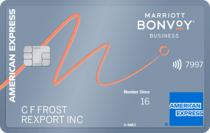
Marriott Bonvoy Business® American Express® Card
Katie's Take
Why this card might (or might not) be right for you.
Show
Hide
Katie's Take
Why this card might (or might not) be right for you.
I like that it won't affect your 5/24 status + has a free night certificate every year
Highlights
The key benefits and earning rates at a glance.
Terms Apply
Show
Hide
Highlights
The key benefits and earning rates at a glance.
Terms Apply
-
Automatic Marriott Bonvoy® Gold Elite Status Automatic Marriott Bonvoy® Gold Elite status with your Card. Earn 25% more points on every eligible hotel purchase.
-
Annual Free Night Award 1 Free Night Award annually after your Card account anniversary, with a redemption level at or under 35,000 Marriott Bonvoy® points. Plus you could top off with up to 25k more points. Certain hotels have resort fees.
-
7% Marriott Booking Discount Receive a 7% discount on eligible bookings as a benefit of being both a Marriott Bonvoy® member & a Marriott Bonvoy Business® American Express® Card Member when you book directly with Marriott through an eligible channel for a participating property under the Amex Business Card Rate.
Offer History
See past welcome bonuses to gauge whether the current offer is elevated.
Show
Hide
Offer History
See past welcome bonuses to gauge whether the current offer is elevated.
| Offer | Spend Req. | Date |
|---|---|---|
| 150,000 Points + $125 Statement CreditElevated | $8,000 in 6 months | Ended 07/15/2026 |
| 175,000 PointsElevated | $5,000 in 6 months | Ended second quarter 2026 |
| 5 Free Night Awards (up to 50K each)Elevated | $6K + $3K in 6 mo | Ended second quarter 2026 |
| 5 Free Night Awards (up to 50K each)Elevated | — | Ended July 2024, Ended March 2024 |
| 3 Free Night Certificates (up to 50K each) | — | Recurring |
| 75,000 - 125,000 Points | — | Typical fluctuation range |
Similar benefit here — an annual free night certificate worth 35,000 points.
We find it really easy to use these Marriott certificates. One spot we love is the Gaylord Rockies outside Denver — it typically costs $300–$400 per night cash, but we can often book it for under 40,000 points and just top off the certificate. We’ve also used them recently for hotels when we travel to the state wrestling tournament for my daughter.
Honestly, I’ve thought about canceling both of these, but I just haven’t done it yet. So for now, they’re still on the keeper list.
No Annual Fee Cards I keep
Not every keeper card has an annual fee. Here are a few no annual fee cards we hold onto for very specific perks that are genuinely worth it.
Blue Cash Everyday® Card from American Express

Katie's Take
Why this card might (or might not) be right for you.
Show
Hide
Katie's Take
Why this card might (or might not) be right for you.
For a no annual fee card, the $7/month streaming benefit is great! A good starter card if you're fine earning cash back instead of points.
Highlights
The key benefits and earning rates at a glance.
Terms Apply
Show
Hide
Highlights
The key benefits and earning rates at a glance.
Terms Apply
-
Disney+ Credit Get up to a $7 monthly statement credit after using your enrolled Blue Cash Everyday® Card for a subscription purchase, including a bundle subscription purchase, at DisneyPlus.com, Hulu.com, or Stream.ESPN.com U.S. websites. Enrollment required. Subscription subject to auto-renewal.
Offer History
See past welcome bonuses to gauge whether the current offer is elevated.
Show
Hide
Offer History
See past welcome bonuses to gauge whether the current offer is elevated.
| Offer | Spend Req. | Date |
|---|---|---|
| $300 cash back | $3,000 in 6 months | Earlier years (~2021-2022 era) |
| As high as $200 cash back | $2,000 in 6 months | Standard |
This was actually the first credit card I ever had. I wouldn’t necessarily open it today, but I keep it because it gives me $7 per month back as a statement credit for Disney+. That’s a great perk for a no annual fee card.
Bank of America® Card
My husband and I both keep a no annual fee Bank of America card with our kids added as authorized users. The reason? The Bank of America Museums on Us® program. On the first full weekend of every month, you can get free admission to a whole list of museums just by showing your card. As a family, having four cards means all four of us can get in.
U.S. Bank Triple Cash Rewards Visa® Business Card

U.S. Bank Triple Cash Rewards Visa® Business Card
Katie's Take
Why this card might (or might not) be right for you.
Show
Hide
Katie's Take
Why this card might (or might not) be right for you.
When this offer goes to $750 cash back it's a very solid offer for a no-annual fee business card that will keep you under 5/24
Highlights
The key benefits and earning rates at a glance.
Terms Apply
Show
Hide
Highlights
The key benefits and earning rates at a glance.
Terms Apply
-
$100 Annual Statement Credit for Recurring Software Subscriptions (FreshBooks, QuickBooks, etc.) $100 statement credit annually for recurring software subscription expenses such as FreshBooks or QuickBooks. The credit isn't immediate — you'll need to make 12 consecutive monthly payments (a full year) before you receive it.
Offer History
See past welcome bonuses to gauge whether the current offer is elevated.
Show
Hide
Offer History
See past welcome bonuses to gauge whether the current offer is elevated.
| Offer | Spend Req. | Date |
|---|---|---|
| $750 Cash BackElevated | $6,000 in 180 days | Summer 2026 |
| $500 Cash Back | Standard spend | Standard offer; baseline returned to between elevated periods |
We each have one of these no annual fee business cards. If you have 12 consecutive months of certain online business expenses — like QuickBooks — you get $100 per year in statement credits. I keep one qualifying online subscription charged to each of our cards to make sure we’re getting those credits every year.
The Full Keeper Card List
Here’s every card we keep, all in one place:
Chase
- Chase Sapphire Reserve®
- Chase Sapphire Preferred®
- Chase Freedom® cards (multiple, no annual fee)
- Chase Ink Business Unlimited® (multiple, no annual fee)
- Chase Ink Business Preferred®
- The Ritz-Carlton™ Card
- World of Hyatt® Credit Card (x2)
- Southwest Rapid Rewards® Priority Credit Card (x2)
- Southwest® Rapid Rewards® Premier Business Credit Card (x2)
American Express
- The Blue Business® Plus Credit Card from American Express (no annual fee)
- Blue Cash Everyday® Card from American Express (no annual fee)
- Marriott Bonvoy® American Express® Card
- Marriott Bonvoy Business® American Express® Card
Capital One
- Capital One Venture X® Rewards Credit Card (planning to downgrade)
Citi
- Citi Strata Elite℠ (x2 — both of us)
- Citi Custom Cash℠ (no annual fee)
IHG
- IHG® Rewards Club Select Credit Card (x2 — discontinued, grandfathered)
Other No Annual Fee Keepers
- Bank of America® Card
- U.S. Bank Triple Cash Rewards Visa® Business Card (x2)
Your Action Steps: Credit Card Spring Cleaning
No matter where you are in your points journey, it’s worth doing a regular review of your cards. Here’s how to approach it:
Step 1: Take stock of every card you have open. If you use the Travel Freely app, this should already be done for you — and if you’re not using it yet, this is a great time to sign up. Otherwise, a simple spreadsheet works just fine.
Step 2: Look at every card with an annual fee. Make sure you’re getting value that comes close to justifying that fee. You can use our benefits calculators to walk through this for most major cards — you just search the card name, find the card page, and the calculator is right there.
Step 3: Make a plan. Here is our Ultimate Guide to Closing a Card so you can understand the full evaluation process before you make any moves. There’s a right way to close a card, and it’s worth knowing before you do it.
There’s no right or wrong answer when it comes to annual fees. Maybe your goal is to keep your out-of-pocket costs as low as possible. Maybe you’re a points hoarder like me and you don’t mind paying a little more to keep your options open. Maybe you love high-end benefits and that’s where your money goes. All of those are valid — and the beauty of having these tools is that you can figure out what actually makes sense for your life.
Table of Contents
Related Posts



Responses are not provided or commissioned by the bank advertiser. Responses have not been reviewed, approved or otherwise endorsed by the bank advertiser. It is not the bank advertiser’s responsibility to ensure all posts and/or questions are answered.
